When Isaiah Anozie was digging a cistern at his compound in Igbo-Ukwu in 1938, he didn't expect to rewrite Nigerian history. But the bronze objects he uncovered—exquisite works of art—would force archaeologists to reconsider everything they thought they knew about ancient Africa.
A Civilization Without Precedent
British archaeologist Thurstan Shaw began excavating the site in 1959 and uncovered three main areas: a storehouse of ritual objects, a burial chamber, and a cache of ceremonial items. The radiocarbon dating was startling: the objects were from the 9th century CE—centuries older than any previously known Nigerian bronzes.
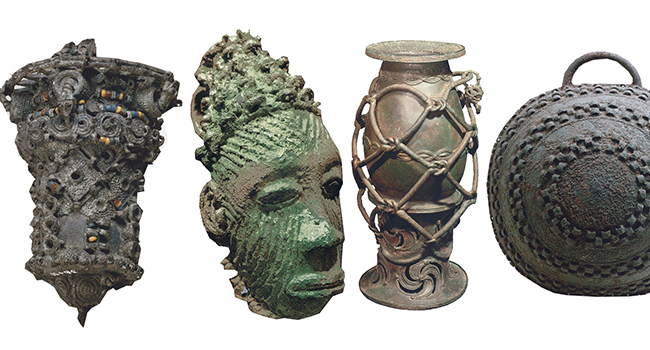
Even more surprising was their sophistication. The Igbo-Ukwu artisans had mastered complex casting techniques, creating objects covered with thousands of tiny inset beads and intricate surface decoration. Some objects showed an aesthetic completely unlike anything found elsewhere in Africa.
Where did this art come from? There were no earlier examples of bronze-working in the region—it seemed to appear fully formed. Some scholars suggested distant influences from the Nile Valley or the forest kingdoms of West Africa, but the Igbo-Ukwu style was unique, with no clear precedents anywhere.
The Treasures of Igbo-Ukwu
The most famous object from Igbo-Ukwu is a bronze roped pot, so intricate that modern craftsmen struggle to reproduce it using traditional methods. There are also shells, staffs, crowns, and ornaments—all decorated with astonishing attention to detail.
One of the most intriguing finds is a staff topped with a figure of a man in elaborate regalia, suggesting a society with complex social hierarchies. Other objects depict animals—leopards, crocodiles, rams—that would later become symbols of authority in many Nigerian cultures.
The burial chamber contained the remains of a high-status individual, surrounded by over 100,000 glass and stone beads. These beads, some from as far away as Venice and India, show that Igbo-Ukwu was connected to long-distance trade networks stretching across the Sahara and beyond.
The People Behind the Art
Who were these master artisans? Shaw believed they were ancestors of today's Igbo people, and modern scholars generally agree. The objects show cultural continuities with Igbo traditions: the use of title-taking regalia, the importance of certain animals, and burial practices.
But many questions remain. Why did this artistic tradition appear so suddenly? Why did it end? And why do we find no similar objects in the centuries between Igbo-Ukwu and the better-known bronzes of Benin?
A Window into the Past
The Igbo-Ukwu bronzes remind us that complex societies existed in Nigeria long before the empires that dominate our textbooks. A thousand years ago, while Europe was still emerging from the Dark Ages, Nigerian artists were creating masterpieces that rival anything produced elsewhere in the world.
Today, most of the Igbo-Ukwu objects are housed at the National Museum in Lagos, where they continue to amaze visitors. They stand as testament to the creativity and skill of our ancestors—and as a reminder of how much we still have to learn about Nigeria's ancient past.